UC San Diego · Scripps Institution of Oceanography · Department of Electrical and Computer Engineering
Situational Awareness Laboratory
We conduct interdisciplinary research at the intersection of signal processing, machine learning, and ocean science, developing methods that help autonomous systems perceive, localize, and understand their environment, in the ocean and beyond.
Principled inference for signals that travel through complex environments
Sensor data from challenging environments like the ocean is sparse, noisy, and ambiguous. Led by Florian Meyer, our lab combines rigorous probabilistic modeling with scalable algorithms and data-driven learning. We test our methods on real-world data, including measurements collected at sea.
Scalable Inference
Factor graphs and particle-based methods for Bayesian inference in high-dimensional problems with an unknown number of parameters.
Physics-Informed Learning
Neural networks that improve model-based estimators without giving up interpretability or calibrated uncertainty.
At-Sea Validation
Algorithms evaluated on data from hydrophones, vector sensors, side-scan sonar, and towed sources, collected in real ocean environments and by autonomous robots.
4Research thrusts
100+Publications
14Awards
$5M+Funding
800 m · RESEARCH
Four research thrusts
Multiobject Tracking
Our goal is to detect and follow an unknown, time-varying number of objects from noisy, ambiguous data. We develop belief propagation methods that solve data association and sparse signal reconstruction at scale and combine them with neural networks that learn prior information as well as motion and measurement models. Applications include sonar, marine mammal monitoring, maritime surveillance, and autonomous driving.
GPS signals do not reach below the surface, but sound does. We develop navigation methods for autonomous underwater vehicles that use side-scan sonar landmarks, observations from a single acoustic receiver, and physics-based propagation models. The goal is accurate positioning with as little infrastructure as possible.
Sound carries information about the ocean it travels through. We solve inverse problems in oceanography: we infer seabed and sediment properties, sound-speed structure, and source parameters from acoustic data using Bayesian methods that embed numerical models of propagation physics and quantify uncertainty. Our work focuses on sequential settings with moving sources and environments that change with range.
In wireless communication, multipath is usually treated as a nuisance; we treat reflections as useful information. Multipath-based SLAM models each specular reflection as a signal from a virtual anchor, which lets a single receiver localize itself and map its surroundings at the same time. We develop direct and adaptive multipath-based SLAM algorithms for distributed MIMO systems, indoor positioning, and underwater environments.
L. Watkins's paper on passive acoustic tracking of sperm whales in 3-D with integrated ray tracing wins a Best Student Paper Award in Signal Processing in Acoustics at ASA 2025
F. Meyer gives the keynote “Bayesian Graph Signal Processing for Information Fusion and Multiobject Tracking” at IEEE Aerospace 2020
Lab
F. Meyer joins UC San Diego and founds the Situational Awareness Laboratory
2000 m · PEOPLE
The team
[ photo ]
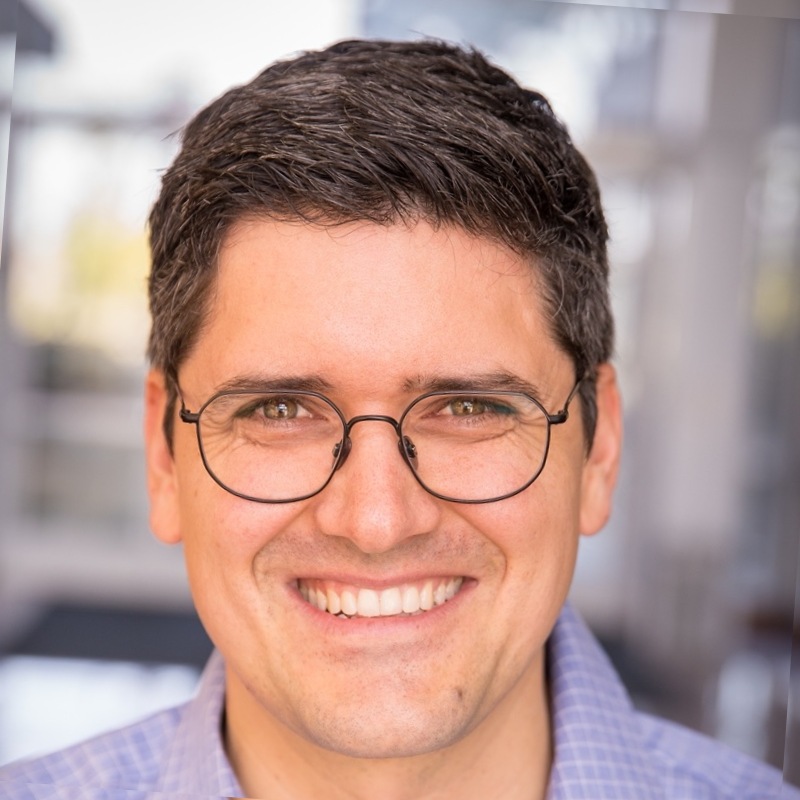
Florian Meyer
Principal Investigator · Associate Professor, Scripps Institution of Oceanography and Department of Electrical and Computer Engineering
Florian Meyer received his MS and PhD degrees in electrical engineering from TU Wien in 2011 and 2015. Before joining UC San Diego, he was a Research Scientist at the NATO Centre for Maritime Research and Experimentation and a Postdoctoral Fellow and Associate at MIT's Laboratory for Information & Decision Systems. He is an Associate Editor of the IEEE Transactions on Signal Processing.
ONR Young Investigator Award 2023DARPA Young Faculty Award 2022NSF CAREER Award 2022ISIF Young Investigator Award 2021R&D 100 Award 2018
Courses in digital signal processing, estimation, and probabilistic inference for students in Electrical and Computer Engineering and at Scripps Institution of Oceanography. Tutorial slides and reference code from our conference tutorials are free to use.
An introduction to multiobject tracking with factor graphs and belief propagation, with a reference implementation of the algorithm from our Proc. IEEE paper.
We are looking for curious PhD students and postdocs with backgrounds in statistical signal processing, estimation theory, machine learning, robotics, or ocean acoustics. Prospective PhD students should apply through the Electrical and Computer Engineering or Scripps graduate programs.